Disciplines as Value Drivers
In ForgeSDLC, discipline blueprints aren't just reference documentation — they're active participants in the delivery process. Each Versona session draws from a specific discipline's body of knowledge, turning abstract best practices into concrete decisions.
How disciplines drive value
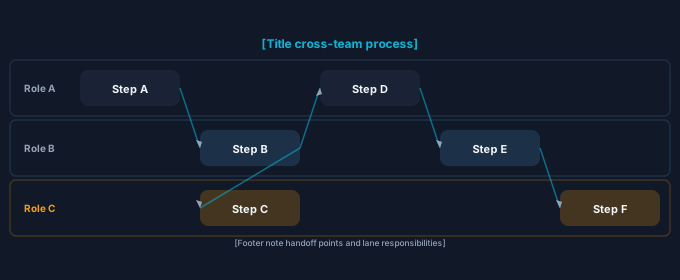
A single Spark can trigger multiple discipline Versonas. The deployment of a payment service requires DevOps knowledge (CI/CD, infrastructure), Security knowledge (OWASP, encryption), and Compliance knowledge (PCI-DSS). Instead of hoping the team remembers all these concerns, the blueprints surface them automatically.
The discipline portfolio
| Discipline | Business value | Key deliverables |
|---|---|---|
| Software Architecture | Reduces rework by catching structural issues early | Architecture Decision Records, C4 diagrams, API contracts |
| DevOps | Accelerates delivery through automation | CI/CD pipelines, IaC templates, SRE runbooks |
| Testing | Prevents defect escape to production | Test strategies, automation frameworks, coverage analysis |
| Security | Protects against breach and compliance failure | Threat models, security gates, incident response plans |
| Frontend | Ensures user experience quality | Component architecture, performance budgets, accessibility gates |
| Data Engineering | Enables data-driven decisions | Data pipelines, quality frameworks, governance policies |
| Compliance | Avoids regulatory penalties | Framework mappings (GDPR, HIPAA, PCI-DSS), audit trails |
Return on investment
Without discipline blueprints
Teams rely on tribal knowledge and individual expertise. When the security expert is on vacation, security reviews don't happen. When the DevOps engineer leaves, the deployment pipeline becomes a black box.
With discipline blueprints
Knowledge is codified, version-controlled, and always available. Every Versona session has access to the full body of knowledge regardless of who's in the room. New team members can contribute quality decisions within days, not months.
Integrating disciplines with ForgeSDLC ceremonies
Each discipline blueprint defines:
- Quality gates — what must be true before proceeding
- Templates — standardized artifacts that capture decisions
- Checklists — practical verification steps
- Bodies of knowledge — reference material for informed decisions
When Versonas are invoked, they pull the relevant subset based on the Spark's context. A frontend Spark triggers Frontend and Testing blueprints. An infrastructure Spark triggers DevOps and Security blueprints.